Core Muscle Research Laboratory
Description:
Established in October 2001, the Core Muscle Research Laboratory (MRL) serves as
a core resource for the Birmingham VA Geriatric Research, Education and Clinical
Center (GRECC) and the University of Alabama School of Medicine. The MRL provides
resources and expertise to carry out molecular and cellular analyses of skeletal
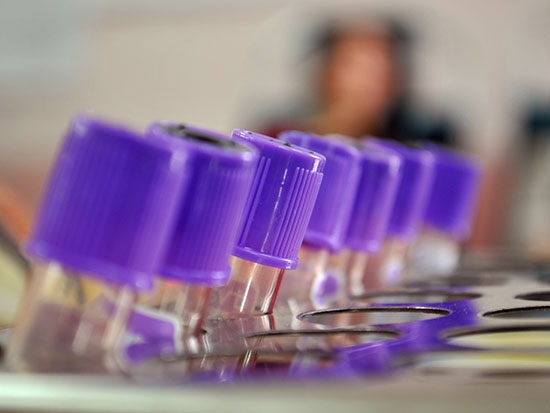
muscle. Tissue specimens typically analyzed include human muscle biopsy samples,
surgical specimens, whole muscles from small laboratory animals, and human blood
serum samples. A variety of tools are used to assess muscle fiber morphology, protein
expression, gene expression, enzyme activities, and serum cytokine and metabolite
concentrations.
The MRL is a fully renovated core facility located in the Birmingham Veteran's Affairs
Medical Center Research Building. Renovations were completed in the fall of 2001
and the laboratory was stocked with all new equipment. The MRL consists of four
wet laboratories, a fluorescence microscopy facility, a cell culture facility, and
office space. The laboratory houses all equipment necessary to carry out experiments
from sample preparation (including small animal dissection) to digitized image analysis.
A summary of major laboratory equipment includes: a fluorescence microscopy station,
light microscopy station, a cryostat microtome, digital densitometry system (i.e.,
a digital darkroom with computer controlled CCD camera), two thermocyclers with
an in situ hybridization module, fluorometer, spectrophotometer, speed vac lyophilizer,
computer-controlled microplate reader, two refrigerated microcentrifuges, standard
benchtop refrigerated centrifuge, tissue homogenizers, two ultra-low freezers, two
incubators, two water purification systems, and additional equipment and supplies
necessary for immunoblotting, mRNA expression studies, immunofluorescence microscopy,
myofiber morphometry, primary tissue culture, and enzyme activity assays.
The overall aim of the director's research program is to elucidate mechanisms of
muscle plasticity in response to various stimuli including loading, unloading, and
aging. Currently the two primary interests are the etiology of age-related sarcopenia
and molecular mechanisms of hypertrophy in older and younger men and women. Human
muscle biopsy analyses are the primary focus, including protein and mRNA expression
studies of contractile protein isoforms, enzymes, cytoskeletal proteins, myogenic
regulatory factors, cell cycle regulators, and growth factors; studies of satellite
muscle cells, both in situ and in primary tissue culture; and quantification of
muscle fiber type, fiber size, and capillary supply.
Opportunity for faculty involvement:
Laboratory services are available to any funded investigator. Currently there are
3 investigators external to the MRL using its services. For future applications
in which the MRL will be a proposed core resource, please contact the director to
define experiments and establish costs prior to submitting the application. The
MRL can incur minor expenses required to generate preliminary data in preparation
for an application.
Additional information can be found at
www.physiology.uab.edu/BammanLab.htm.
Facility contact person:
Marcas M Bamman, Ph.D., F.A.C.S.M.
Associate Professor, UAB Department of Physiology & Biophysics
Director, Center for Aging Translational Research Program
Director, GRECC University of Alabama School of Medicine Core Muscle Research Laboratory
Director, GRECC Mobility and Exercise Facility
Director, GRECC Exercise Physiology Laboratory
Director, Exercise Science Internship Program
Birmingham VA Medical Center
VAMC 11G, zip 0001
(tel) (205) 558-7064
(fax) (205) 558-4749
Web site: www.physiology.uab.edu
Leaders and Key Staff:.
- Marcas Bamman, Ph.D., Director
- Jeong-su Kim, Ph.D., Research Associate
- John K Petrella, Ph.D., Research Associate
- Melissa Baker, Research Assistant
- David Kosek, Ph.D. Candidate
- David Mayhew, M.D./Ph.D. Student